
From the utility
Water enters your home
It can still carry chlorine or chloramine, dissolved minerals, and fine particles.
Our core systems cover disinfectant, drinking water, hardness, iron, and sulfur. Your neighborhood's report gets us started. What we find at your house decides the final equipment, including any add-ons the water actually requires, and your exact price comes in writing before any work.
It can still carry chlorine or chloramine, dissolved minerals, and fine particles.
The pool smell and taste are addressed before water reaches your showers, appliances, and faucets.
The kitchen system reduces dissolved solids and certified contaminants at its dedicated faucet.
1. Water arrives with the disinfectant still in itChlorine or chloramine from the utility, plus the dissolved solids and particles behind film and flat taste.
2. The carbon tank removes the disinfectantEvery tap, shower, and appliance in the house gets water without the pool taste and smell.
3. RO finishes the drinking waterDissolved minerals come out at the kitchen sink, so glasses rinse clean and the water has no aftertaste.
| Your symptom | Carbon | RO | Softener | Well system |
|---|---|---|---|---|
| Pool taste and smell | ✓ | ✓ at the sink | · | · |
| Dry skin and dull hair | ✓ | · | · | · |
| Spots on glasses rinsed at the sink | · | ✓ | · | · |
| Flat coffee | · | ✓ | · | · |
| Crusty scale from hard water | · | · | ✓ | · |
| Rotten-egg smell | · | · | · | ✓ |
| Orange stains in tubs and laundry | · | · | · | ✓ |
| Bacteria worry on a well | · | · | · | ✓ with UV |
| Drinking water you trust | · | ✓ | · | · |
Details on every system below, with the actual units.
Takes the chlorine or chloramine out where water enters your house, so every tap, shower, and appliance gets clean water. A full-size tank gives the water real contact time with the media, which is what cartridge gadgets from the big-box store can't do.
The spec that matters here: Catalytic carbon is our standard medium for every municipal-water home. It addresses chlorine and is better suited to the chloramine used across both shores, including New Orleans, Metairie, Covington, Mandeville, and Slidell. The price difference is too small to justify installing the lesser medium.
Silica, sodium, and the rest of the dissolved solids are the things catalytic carbon and softeners cannot remove. Reverse osmosis substantially reduces them at a dedicated kitchen faucet.
Glasses you rinse at this sink dry spotless, coffee stops tasting flat, and you stop paying for bottled water. For older homes, this is also the certified answer for lead, which usually enters through a house's own aging pipes.
The certified tank system is our standard RO, and tankless is an optional space-saving upgrade. Both serve the dedicated kitchen tap, while showers and appliances remain on the whole-home catalytic carbon system.
Softeners fix hard water: crusty scale on fixtures, stiff laundry, soap that won't lather, and scale eating the water heater from the inside.
Hard water needs two kinds of treatment. A dedicated softener handles hardness, and a separate catalytic-carbon tank handles the disinfectant. The brine tank supplies the salt that regenerates the softener.
Your neighborhood's report carries your hardness number, and the quote sizes the softener to it.
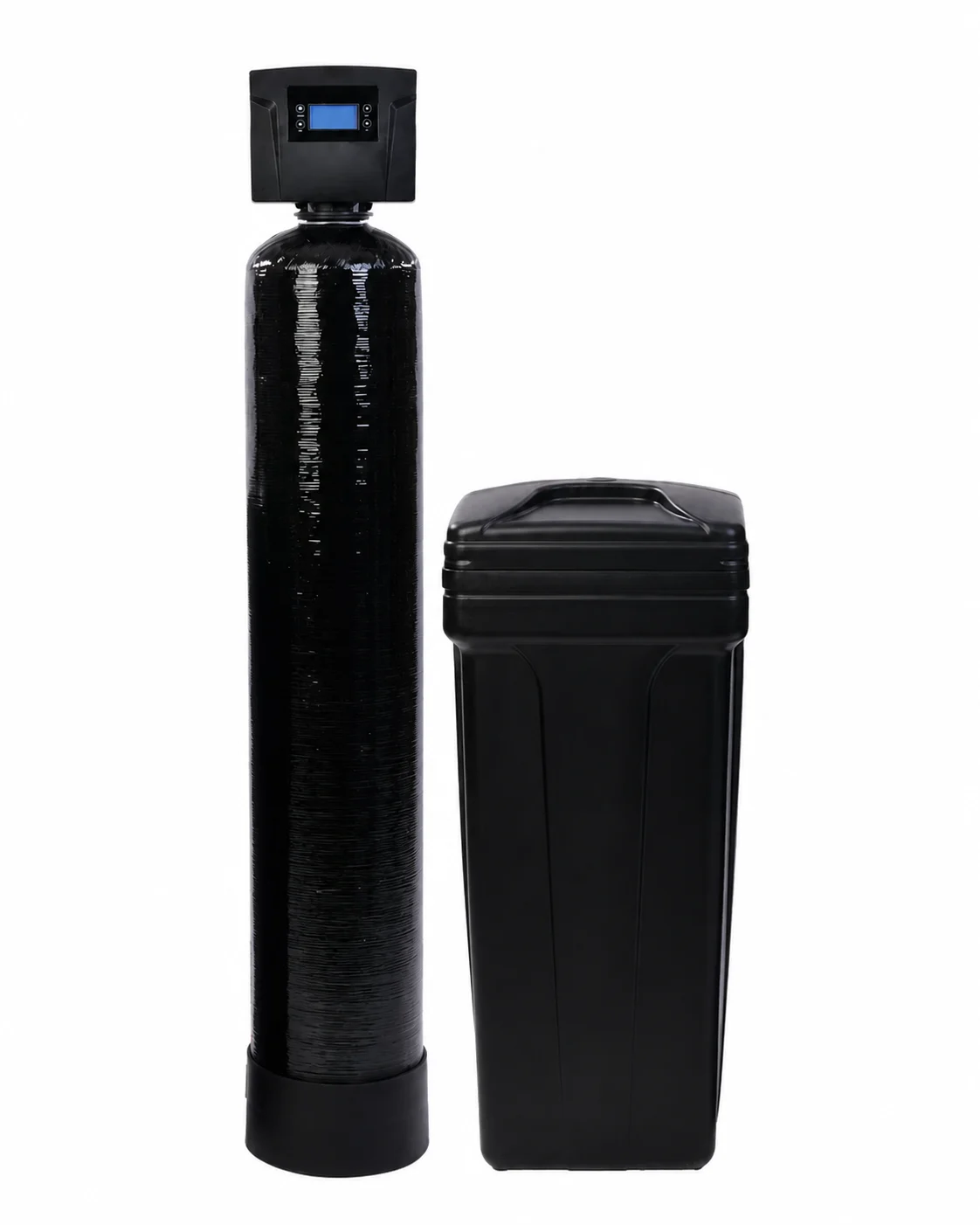
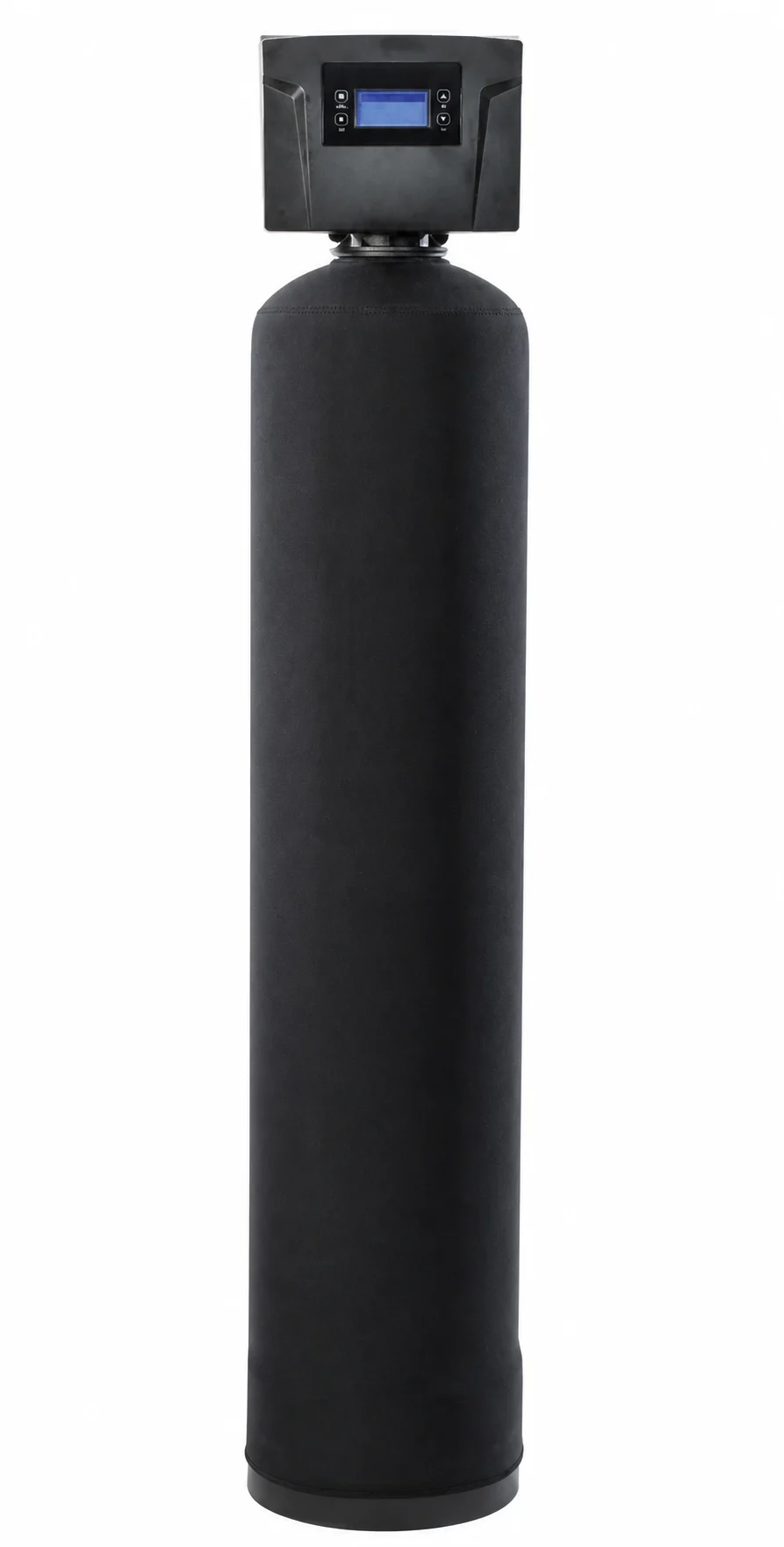
Sulfur gas that makes the bathroom smell like rotten eggs and iron that stains tubs and laundry orange. Wells have no public report, so we test the water before confirming the system.
The single-tank air-injection system handles iron and sulfur without chemicals, an air pump, or a venturi. Your existing well pump supplies the water. It is not the equipment pictured here.
Equipment for a specific water condition or a homeowner who wants the upgraded version. Your report, tap test, and plumbing inspection say whether any of these belong in the quote.
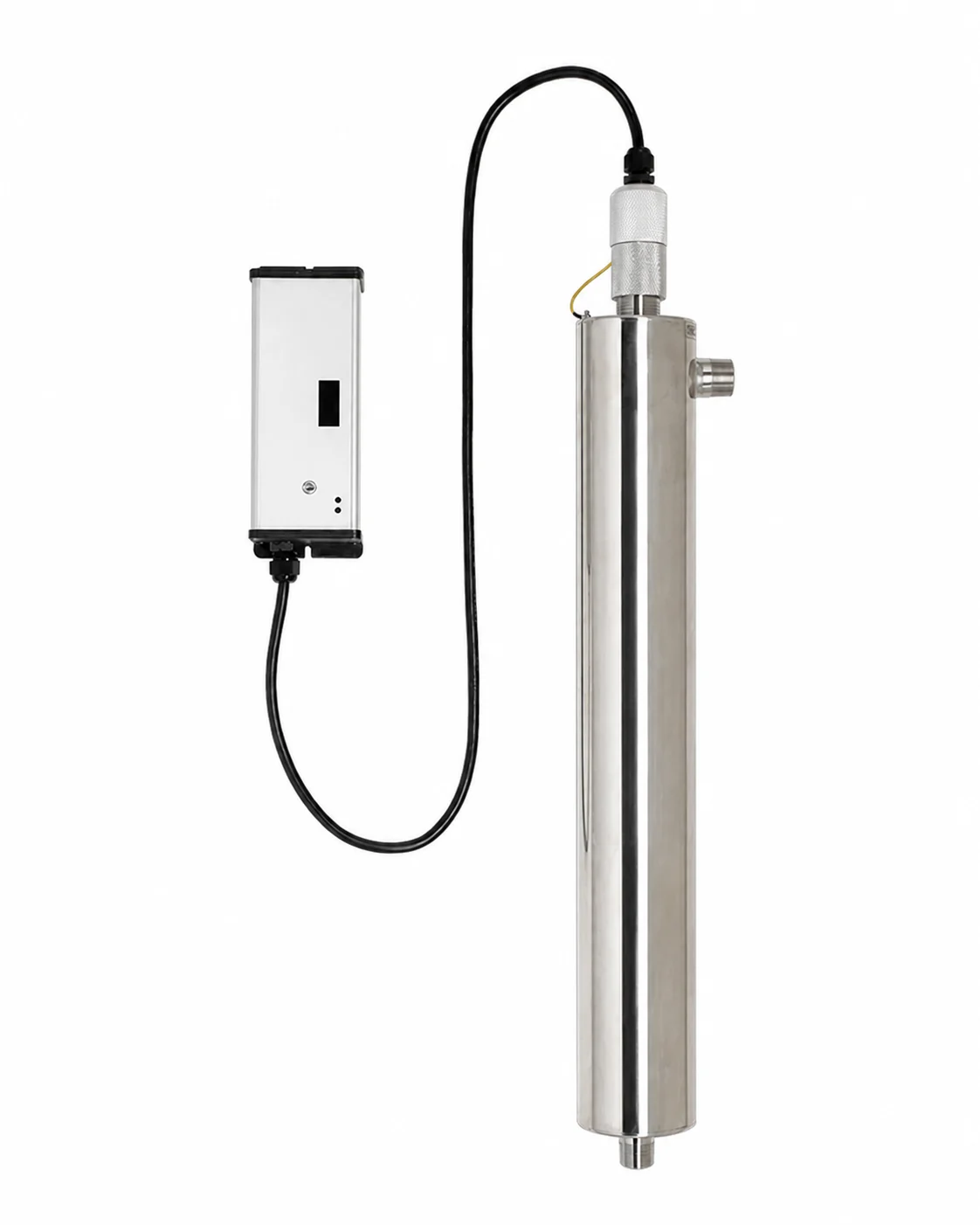
A stainless UV chamber treats microorganisms in the water path without adding chemicals. It belongs on a well plan when the test and site conditions support it, not as an automatic add-on to every house.
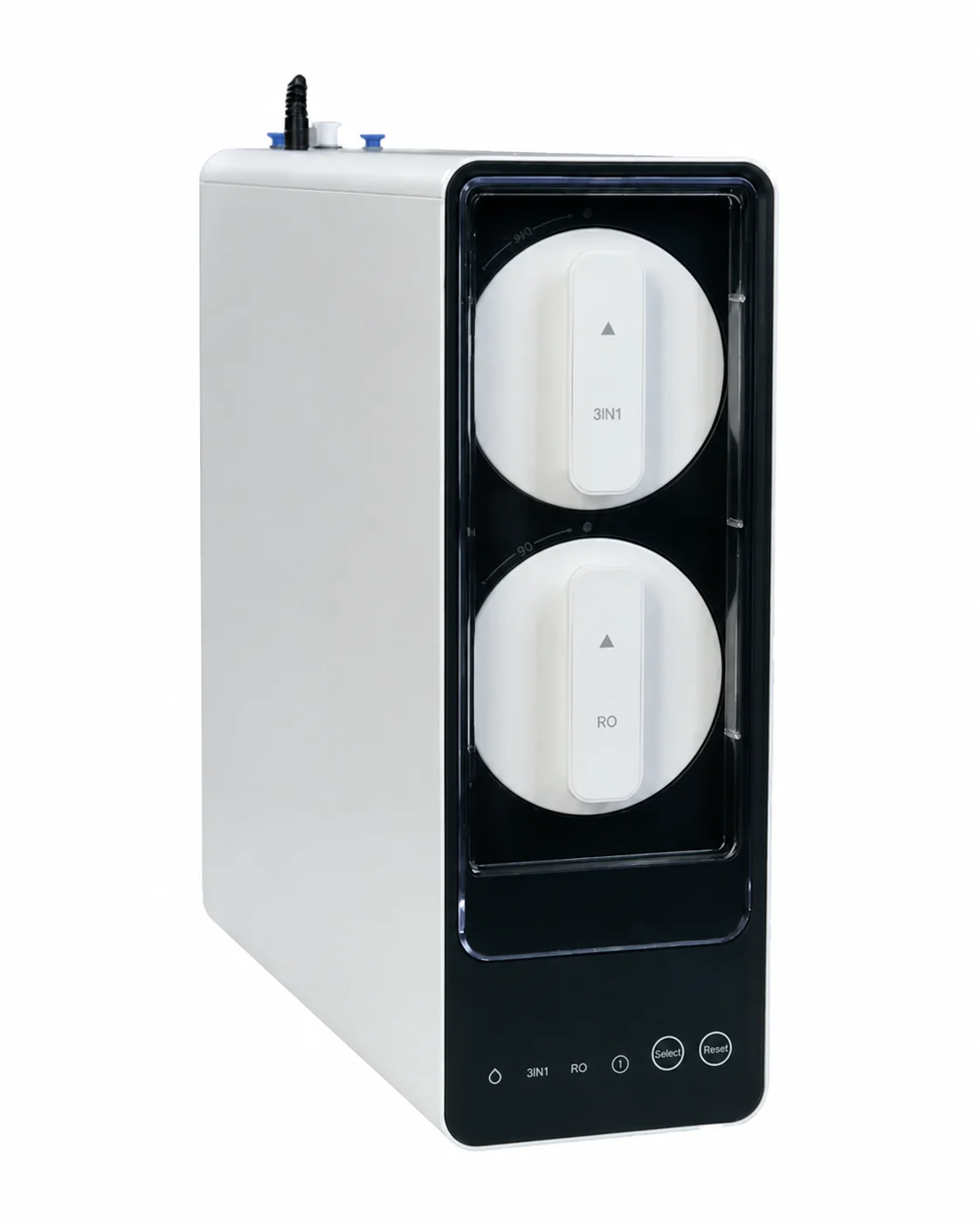
Makes drinking water on demand with no storage tank, so it takes up far less room under the kitchen sink, and its twin quick-change cartridges swap in seconds. Higher output and faster recovery for a household that drinks a lot of water.
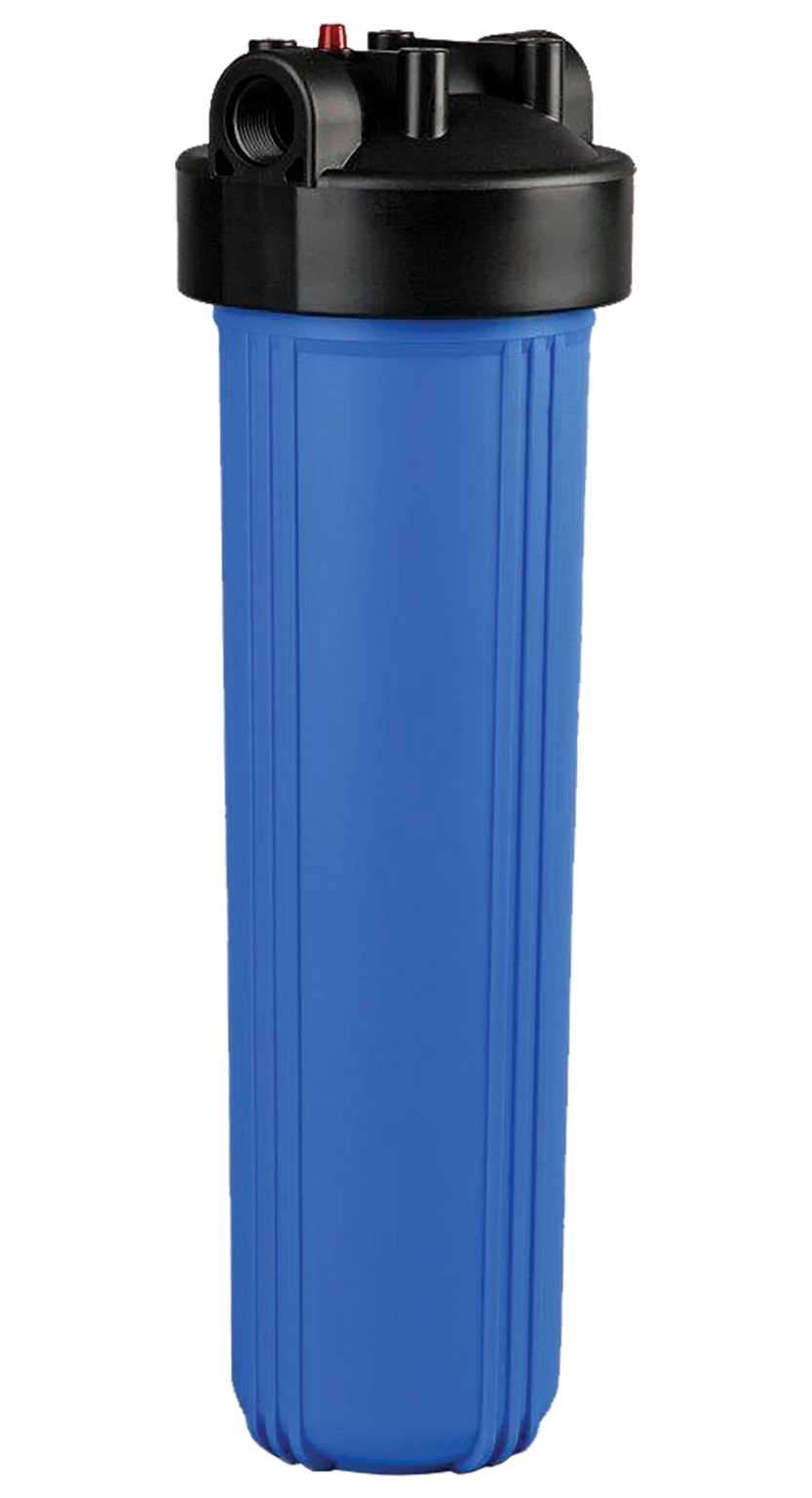
Catches grit, sand, rust flakes, and loose pipe scale before they reach the core treatment equipment, fixtures, and appliance valves. Our standard setup is a 20-inch, 1-inch-port housing with a 5-micron polypropylene cartridge. For confirmed coarse grit, a 1-inch Rusco spin-down filter can go ahead of it.
Your written quote names the exact model and size. These are the standard platforms, with the numbers that matter for flow, capacity, upkeep, and warranty.
Standard residential configuration
IAPMO R&T certified to NSF/ANSI 42 for chlorine reduction. Catalytic media is selected for both chlorine and chloramine service. No chloramine-specific NSF certification is claimed.
Dedicated softener and carbon treatment tanks
Standard four-stage tank system
One treatment tank, sized to the home and well flow
Optional, not the certified standard RO
Full-flow cartridge housing, sized for whole-home use
For confirmed coarse sand or grit, a spin-down separator can be added ahead of the cartridge housing. The final quote names every housing and filter element.
The short version is above. These are the full explanations, in plain English, for the readers in the family.
What is in the tank. Catalytic activated carbon: carbon processed to handle both chlorine and the more persistent chloramine used by many local utilities. Its enormous internal surface area gives the disinfectant somewhere to react and stay behind as water moves through the tank.
Why the tank is big. Contact time decides how much comes out. Water has to spend real seconds against the carbon, so we install a full-size media tank with a one-inch path through it. Your shower pressure stays where it was, and the water gets the time it needs.
Why we use catalytic carbon everywhere. Some towns disinfect with chlorine and others use chloramine, which is more persistent. Catalytic carbon is the stronger common platform for both. The small equipment-cost difference does not justify giving chlorine-served homes a lesser medium.
Living with it. At night the valve runs a backwash: it reverses the flow, fluffs the media bed, and rinses what it has collected to the drain. There are no cartridges to remember. The pool smell leaves the shower first. Coffee and tea stop tasting like disinfectant. And the rubber seals in your dishwasher, washer, and ice maker quit soaking in the chlorine that cracks them.
What hard water is. Calcium and magnesium the water dissolved out of rock and soil on its way to you. It is fine to drink and hard on everything else: it bakes onto heater elements as scale, stiffens laundry, and fights your soap.
How the trade works. Inside the resin tank are millions of tiny beads holding a light sodium charge. Water threads between them, the beads swap their sodium for the calcium and magnesium, and the water leaves soft. Chemists call it ion exchange, and softeners have run on it for a century.
Why the treatments stay separate. Blue Otter recommends catalytic carbon rather than ordinary granular carbon. The softening resin and catalytic carbon therefore stay in dedicated treatment tanks, each doing its own job.
Where the salt comes in. When the beads fill up, the valve draws salty water from the brine tank through the resin, knocks the hardness loose, and sends it down the drain. Ours meters your actual use and recharges only when capacity is spent, which keeps the salt bill low.
Why yours might not need one. On soft water the beads have nothing to grab. You would be buying salt and changing nothing you can feel. That is why a softener enters our quote only when your neighborhood's hardness number says it should.
How the membrane works. The membrane is a sheet rolled into a cylinder, so tight that pressure forces the water itself through while the silica, the sodium, and the rest of the dissolved solids stay behind and rinse away to the drain. This is a different job from the whole-home carbon tank. Carbon grabs chemicals like chlorine as the water passes, but dissolved solids slide through carbon untouched. Stopping them takes the membrane, which is why desalination plants use this same process to turn seawater fresh.
The other stages protect it. A sediment filter catches grit first. A carbon block takes out the chlorine that would eat the membrane. After the membrane, one last carbon polish sits right before your glass.
Why it serves one faucet. Drinking, cooking, and coffee flow through only a couple of gallons of a family's day. Making just those gallons to drinking-water grade is what keeps the system compact, quiet, and down to an annual cartridge swap you do by hand.
Tank or tankless. The standard unit stores a few gallons in a small pressurized tank so the faucet pours fast. The tankless version makes water on demand, takes up far less room under the sink, and swaps its twin cartridges in seconds. Same water in the glass either way.
Light as the disinfectant. The chamber is a stainless sleeve with an ultraviolet lamp down its center, tuned to a germicidal wavelength. Any microorganism passing through takes a dose of light that scrambles its ability to reproduce. Nothing is added to the water, and nothing about the taste changes.
Who needs it. UV enters a well-water plan when the test and site conditions support microbial treatment. It is not automatically added to every well or city-water house.
Living with it. One lamp a year, changed like a light bulb, a wipe of the quartz sleeve while you are in there, and a sediment prefilter that keeps the water clear enough for the light to do its work.
Start with bathrooms. Sizing starts with how much water the house can ask for at once. Two showers running while the washer fills is a very different demand than one person at a sink, and bathroom count predicts that far better than square footage.
Why the tank size matters. Carbon needs contact time. A tank that is too small for the house lets water rush through faster than the media can work, and the taste you paid to remove starts slipping past at exactly the busy moments. Too big wastes media and backwash water. The right size holds the water long enough at your peak demand.
Pressure is a plumbing question. The valve and porting are matched to your service line so the system does not become a bottleneck. That is why the units we install run full one-inch paths, and why we look at your plumbing before the quote instead of after the install.
What decides it. Three things: your bathroom count, your service line, and your neighborhood's report. Those pick the valve and the tank, and the quote names the exact model so you can look it up.
Start from the test. A well is your own private water system, and it publishes no annual report. So the plan starts with a water sample from your tap. We collect it and send it to a lab for the full workup, iron, sulfur, hardness, pH, and bacteria, and it costs you nothing. The system is designed from those numbers.
The workhorse tank. The air-injection unit holds a pocket of compressed air at the top. Incoming water sprays through it, and the oxygen turns dissolved iron and sulfur into solid particles, the same way a cut apple browns in open air. The media bed below catches the particles, and the nightly backwash sends them to the drain. Nothing gets bought, dosed, or refilled.
One treatment tank. The system does not use a separate air pump. Your existing well pump moves the water, and the AIO tank creates the air pocket it needs during regeneration. The test and the well's available flow tell us whether the system is the right fit and what size the tank should be.
What sediment means. Sediment is suspended material you can physically catch: sand, grit, rust flakes, and loose scale from mains, service lines, wells, or the home's own plumbing. It is different from hardness and other minerals that are dissolved in clear water.
Why it goes first. Every downstream piece of equipment has small passages, valves, or media that work better when grit is removed before the water reaches them. The sediment stage takes that abuse so the carbon tank, softener, fixtures, and appliances do not have to.
What we install. The standard setup uses the supplier's 20-inch high-flow housing with a 5-micron polypropylene cartridge. For confirmed coarse sand or grit, a 1-inch Rusco spin-down filter can go ahead of it and be flushed without replacing a cartridge.
Why the house still matters. A filter that works well at one house can load too quickly at another. We check the material, pressure, and flow at the property, then put the exact configuration and service schedule in writing.
What it cannot do. A sediment filter cannot remove chlorine, chloramine, hardness, dissolved solids, sulfur gas, or bacteria. Those require their own treatment when the report or test supports it.
And what none of them change.
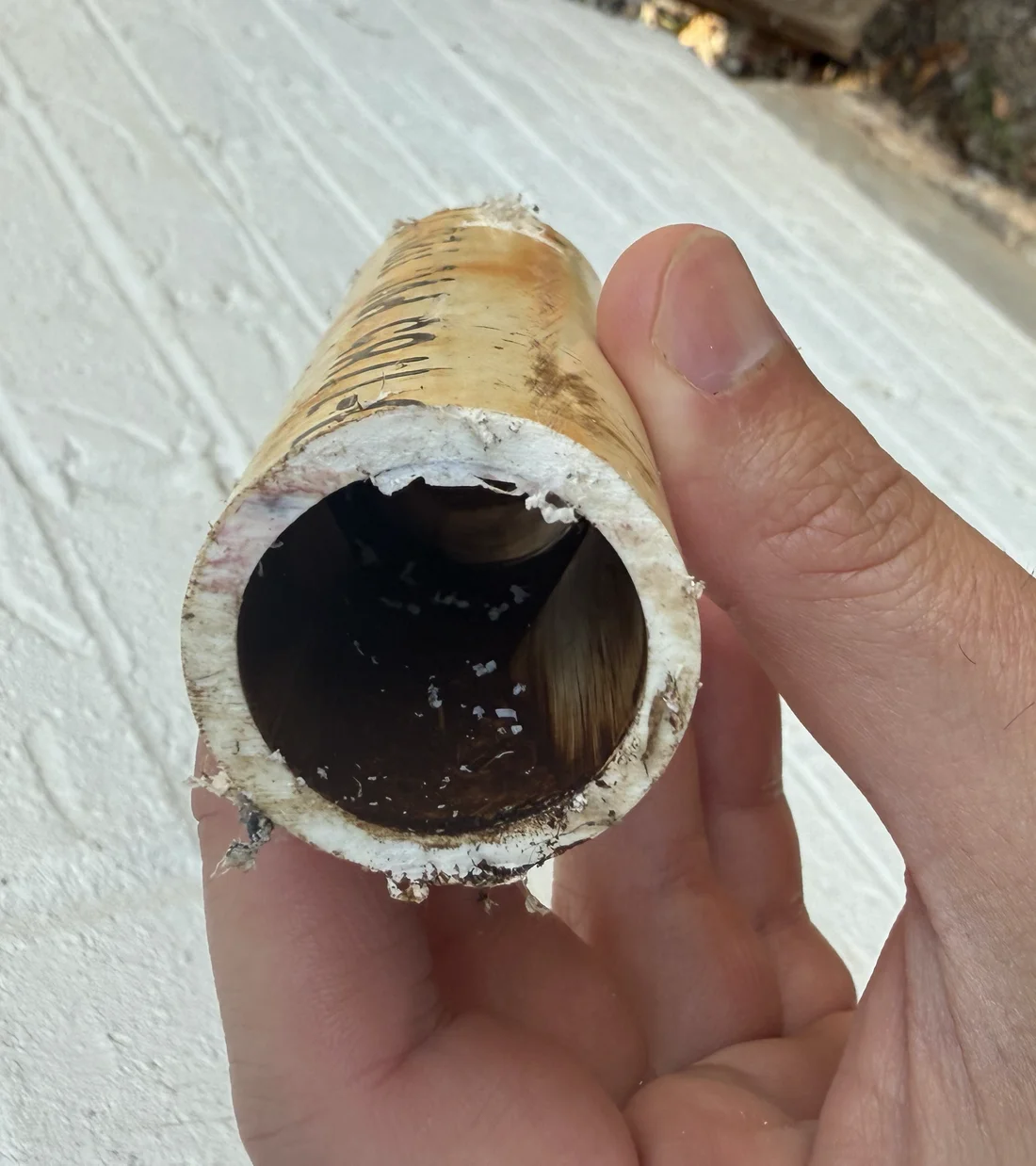
The pipe in this photo came out of the founder's own Covington home. Years of mineral buildup, from water that tests soft. Every year it keeps coating the pipes, the water heater, and every appliance that touches water.
A new build skips all of it. The system goes in clean during construction, the plumbing stays the way it was on day one, and your appliances run on filtered water from the first glass. If you're building or buying new anywhere in Southeast Louisiana, this is the easiest install we do.
Get my written plan and priceWe service and repair existing systems: worn media, tired resin, failed valves. Repairs get the same written, itemized quote as installs.
See what owning a system is like →
Get my written plan and price*Certification statements and warranty terms reflect the manufacturer's published listings and written warranty terms for the equipment we install. Your written quote identifies the exact model.